Login
Contact


 Share :
Description
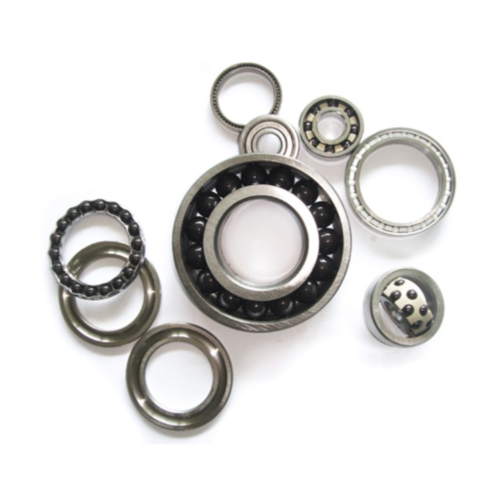
Hybrid Ceramic Bearings are specialized bearings that combine two distinctly different materials. Their defining characteristic is that the inner and outer rings are made of traditional high-chrome steel (or stainless steel), while the rolling elements (balls or rollers) are made of ceramic material (most commonly Silicon Nitride, Si3N4).
This combination blends the strengths of both materials, allowing the bearing to overcome many of the physical limitations inherent in all-steel bearings. Below is a detailed overview of their core features and main applications:
1. Core Features
Extreme High Speeds & Low Inertia: Silicon nitride ceramic balls are approximately 60% lighter than standard steel balls. This drastically reduces centrifugal force during high-speed rotation, minimizes frictional heat, and significantly elevates the limiting speed compared to conventional steel bearings.
Excellent Electrical Insulation (Anti-Electrical Erosion): Ceramics are natural insulators. In electric motors or generators, stray currents often cause "current leakage," leading to electric arcing that damages traditional steel bearing raceways (electrical erosion). Hybrid ceramic bearings completely block electrical currents, thereby safeguarding the bearing’s service life.
High Rigidity & Low Deformation: The elastic modulus (rigidity) of ceramics is about 50% higher than that of steel. This means they are less prone to deformation under heavy loads, delivering much more precise rotational accuracy.
Wear Resistance & Extended Lifespan (Anti-Seizure): Since ceramic and steel are dissimilar materials, their material affinity is extremely low. Even under extreme conditions such as poor lubrication, ultra-high speeds, or rapid start/stop cycles, they resist micro-welding (seizure) and flaking. Consequently, their lifespan is typically several times longer than that of all-steel bearings.
Low Thermal Expansion: The thermal expansion coefficient of ceramics is only about 1/4 that of steel. This allows the bearing's internal preload and clearance to remain highly stable even in environments with severe temperature fluctuations.
2. Main Applications
Hybrid ceramic bearings are the premier choice for modern high-speed, electrified, and high-precision equipment:
Electric Vehicle (EV) Motors: They prevent traction motors from suffering electrical erosion damage caused by shaft currents generated by high-frequency inverters.
Precision Machine Tool Spindles: Used in the high-speed spindles of CNC machining centers to achieve the ultimate combination of high rotational speeds, low heat generation, and high rigidity.
Wind Turbines: Installed inside large-scale generators to isolate induced currents and extend maintenance cycles.
Semiconductor & Vacuum Equipment: They exhibit excellent wear resistance in vacuum or high-temperature environments where conventional lubricants cannot be used.
High-End Sports Equipment: Popularly utilized in road bicycle wheelsets and bottom brackets (BB) to achieve ultra-low rolling resistance for maximum glide.
This combination blends the strengths of both materials, allowing the bearing to overcome many of the physical limitations inherent in all-steel bearings. Below is a detailed overview of their core features and main applications:
1. Core Features
Extreme High Speeds & Low Inertia: Silicon nitride ceramic balls are approximately 60% lighter than standard steel balls. This drastically reduces centrifugal force during high-speed rotation, minimizes frictional heat, and significantly elevates the limiting speed compared to conventional steel bearings.
Excellent Electrical Insulation (Anti-Electrical Erosion): Ceramics are natural insulators. In electric motors or generators, stray currents often cause "current leakage," leading to electric arcing that damages traditional steel bearing raceways (electrical erosion). Hybrid ceramic bearings completely block electrical currents, thereby safeguarding the bearing’s service life.
High Rigidity & Low Deformation: The elastic modulus (rigidity) of ceramics is about 50% higher than that of steel. This means they are less prone to deformation under heavy loads, delivering much more precise rotational accuracy.
Wear Resistance & Extended Lifespan (Anti-Seizure): Since ceramic and steel are dissimilar materials, their material affinity is extremely low. Even under extreme conditions such as poor lubrication, ultra-high speeds, or rapid start/stop cycles, they resist micro-welding (seizure) and flaking. Consequently, their lifespan is typically several times longer than that of all-steel bearings.
Low Thermal Expansion: The thermal expansion coefficient of ceramics is only about 1/4 that of steel. This allows the bearing's internal preload and clearance to remain highly stable even in environments with severe temperature fluctuations.
2. Main Applications
Hybrid ceramic bearings are the premier choice for modern high-speed, electrified, and high-precision equipment:
Electric Vehicle (EV) Motors: They prevent traction motors from suffering electrical erosion damage caused by shaft currents generated by high-frequency inverters.
Precision Machine Tool Spindles: Used in the high-speed spindles of CNC machining centers to achieve the ultimate combination of high rotational speeds, low heat generation, and high rigidity.
Wind Turbines: Installed inside large-scale generators to isolate induced currents and extend maintenance cycles.
Semiconductor & Vacuum Equipment: They exhibit excellent wear resistance in vacuum or high-temperature environments where conventional lubricants cannot be used.
High-End Sports Equipment: Popularly utilized in road bicycle wheelsets and bottom brackets (BB) to achieve ultra-low rolling resistance for maximum glide.
Related Products
Plastic Bearings
Ceramic Bearing
Crossed Roller Bearing
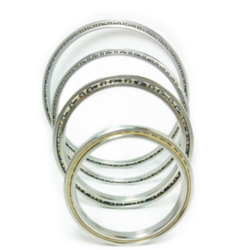
Thin-walled bearing
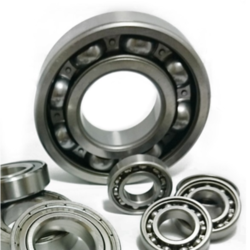
Deep groove ball bearing
You may also like
Highest Rated Products
Back
 Product Inquiry